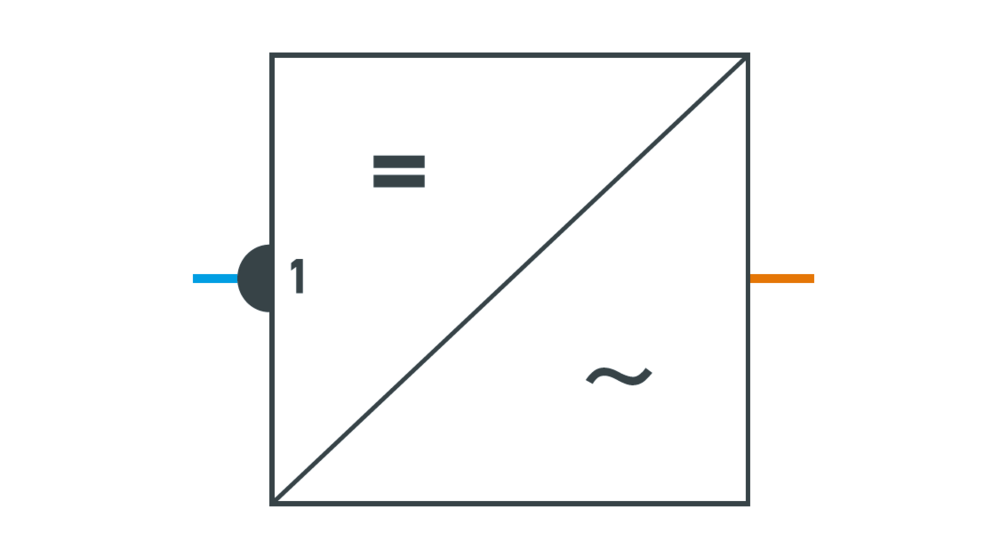
The main task of an inverter is to convert the direct current of the PV modules into alternating current that is suitable for the grid and the consumer.
Furthermore, today’s inverters offer additional functions such as system monitoring, storage connection, emergency power function or integration into smart home systems.
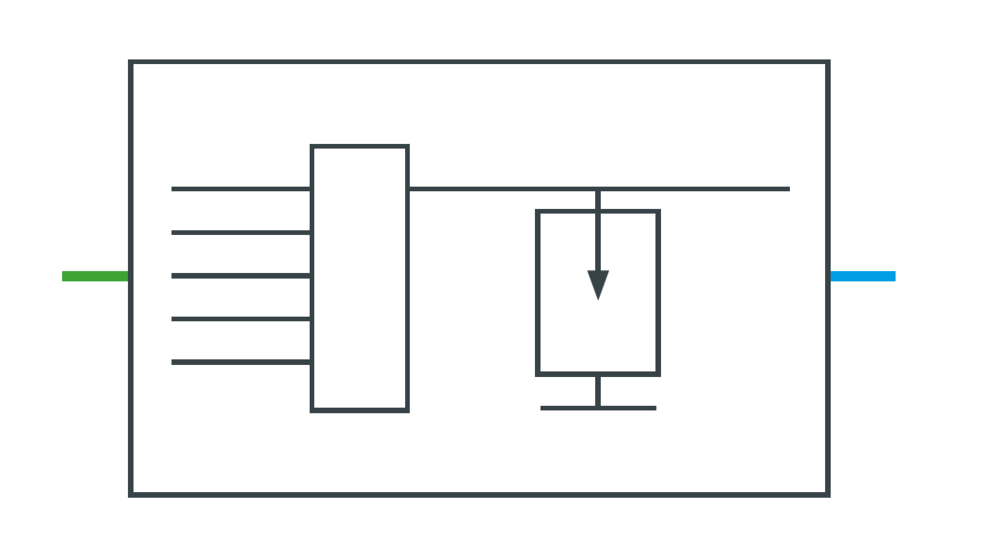
The strings of the solar generator converge in the generator connection box and are combined to form the DC mains.
Safety-relevant parts such as surge protection and earthing connection are also components of the generator connection box.
They route the positive and negative cables of a string into the interior of the roof, where they are connected to the generator connection box by the electrician who performs the work.
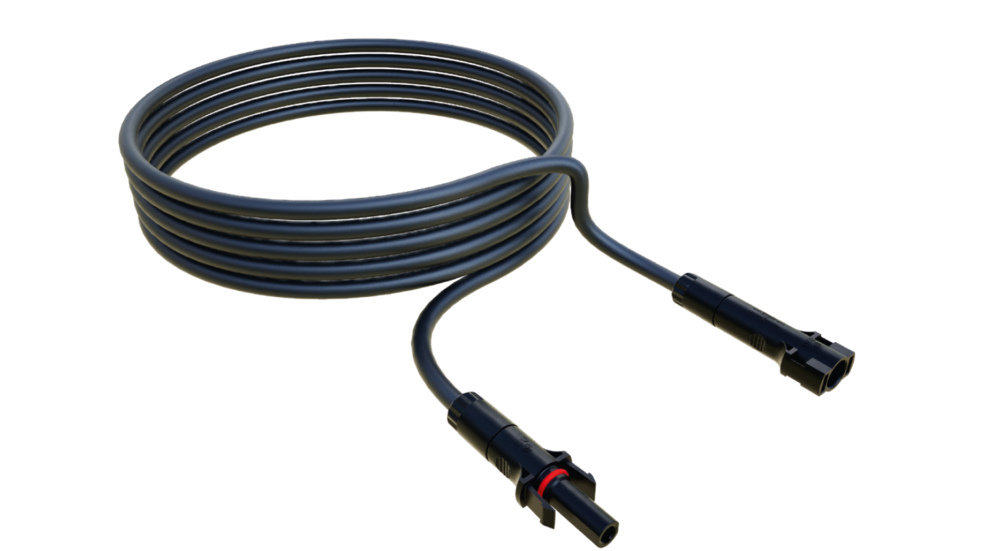
Within the PREFA solar roof panel system, string cables are available as string cable packages of two cables each. These are pre-assembled in standard lengths, with one end equipped with a socket (–) and the other end with a plug (+).
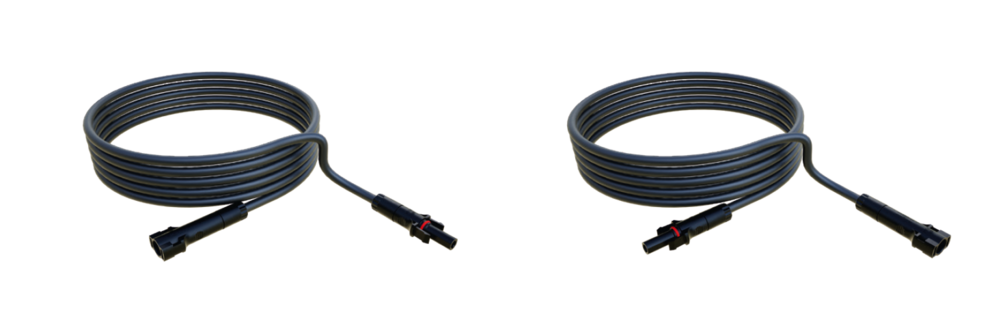
If a string extends over several rows of solar roof panels, they must be connected by means of connecting cables.
These cables are manufactured on a project-by-project basis and are assigned by means of sequential numbering. The cable ends are each equipped with a PV plug and a PV socket.
Refer to the installation plan for the relevant position.
The metallic, non-current-carrying parts of the system must be connected to an equipotential bonding conductor.
Lightning protection equipotential bonding conductors that can carry partial lightning currents must have a minimum cross-section of 16 mm². The copper cable must be green/yellow insulated.
Due to the single lock welt of the solar roof panel, an electrically conductive connection is created, thus the entire roof has a low resistance value.
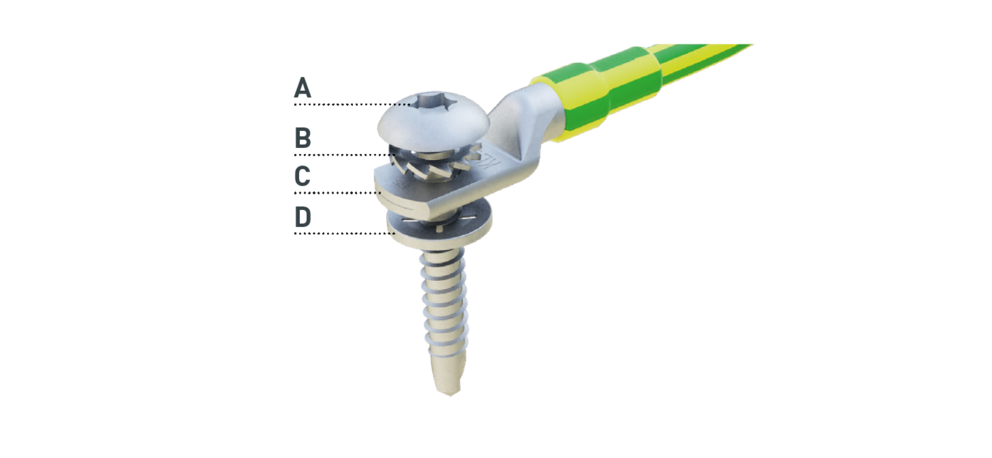
For PREFA solar roofs, a 16 mm² lightning protection equipotential bonding cable with stainless steel contact is always supplied.
The component also consists of the mounting screw (A), locking nut (B), stainless steel contact (C) and screw locking device (D) (see figure below).
The locking nut is only to be used once. This must be replaced when reinstalling.
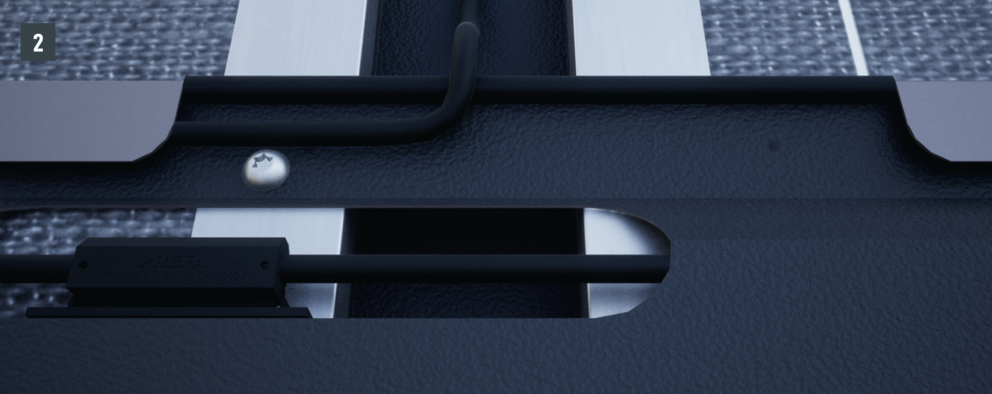
The solar roof panels, which are located above the cable duct, must be fixed with an additional pan head screw (see Fig. 2). The cable duct must therefore be made of an aluminium flashing to create an additional vertical conductive connection between the solar roof panels.
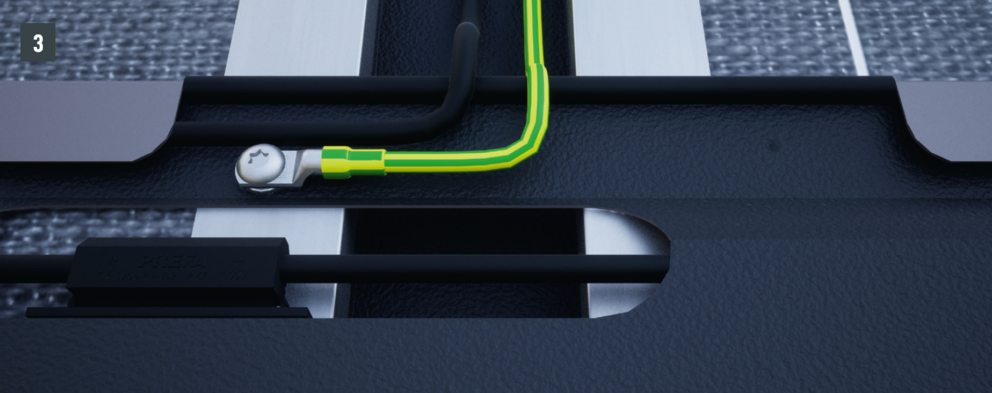
In the last row, the equipotential bonding is screwed along with the solar roof panel, which lies above the cable duct (see Fig. 3), placed in the cable duct with the string cables and routed into the roof interior.
Prenesete lahko samo vsebine iz ene kategorije izdelkov. Če potrebujete vsebine iz več kategorij, ustvarite ločen prenos za vsako področje izdelkov.