

The supporting sub-structure forms the static connection between the structure and the façade cladding. Preferred materials used for the supporting system are metal and timber, or a combination of both. Basically a structural analysis for supporting system is required, this applies to new builds as well as to restoration works.
The structural-physical requirements must be taken into account. The way in which the sub-structure framework is anchored depends on the type of subsurface and the loads encountered, as well as fire safety requirements. The function and dimensions of the supporting system should be verified on both new builds and renovations as well as the fasteners to be used, depending on the material of the supporting system.
Generally speaking, the structural stability analysis covers the supporting system, including anchors and connectors, as well as the cladding and its fastenings.
The fastenings specified represent the base fastening of the respective products. In the case of increased wind loads, it may be necessary to increase or decrease the number of fastenings depending on the building.
Provide all relevant information regarding supporting system spacings to the carpenter and monitor workmanship carefully. PREFA small-format products must be installed as façade cladding on wooden full formwork substrate or, depending on fire protection requirements, on metal trapezoidal deck.
The substrate must be carried out according to applicable standards and adapted to local conditions.
Recommendation for full formwork:
Recommendation wood-based panel (according to EN 14964):
Sheets made of wood-based materials
When using wood-based sheets as a substrate for PREFA façade coverings, the choice of thickness, the mounting to the wood-based material and the intended use as a metal roof substrate must be agreed with the manufacturer and/or distributor of the wood-based sheets.
Note
PREFA does not recommend the use of OSB sheets as a substrate for metal roofing with or without a separation layer.
The solar roof panel on the façade can also be installed on skip sheathing (at least 24 mm). When installing on a skip sheathing, a board must be placed under each fastening strip while observing a lacing dimension of 420 mm.
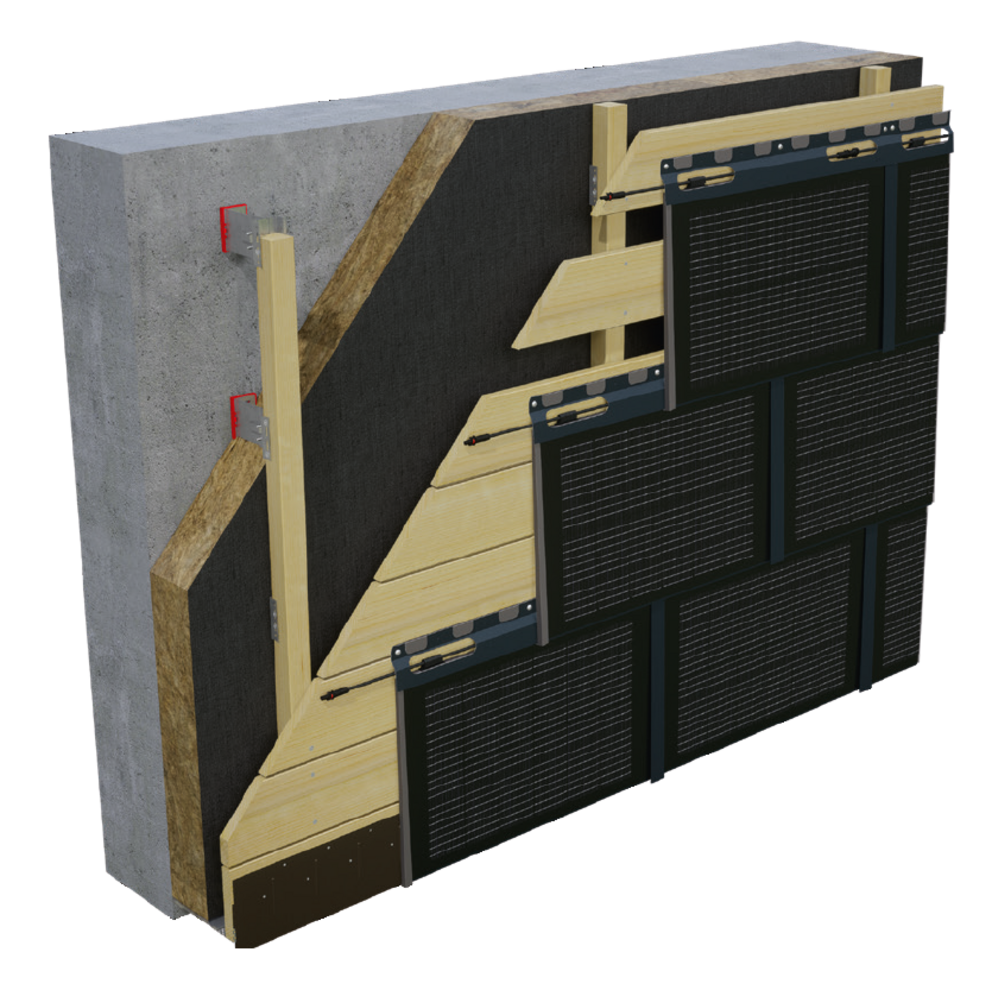
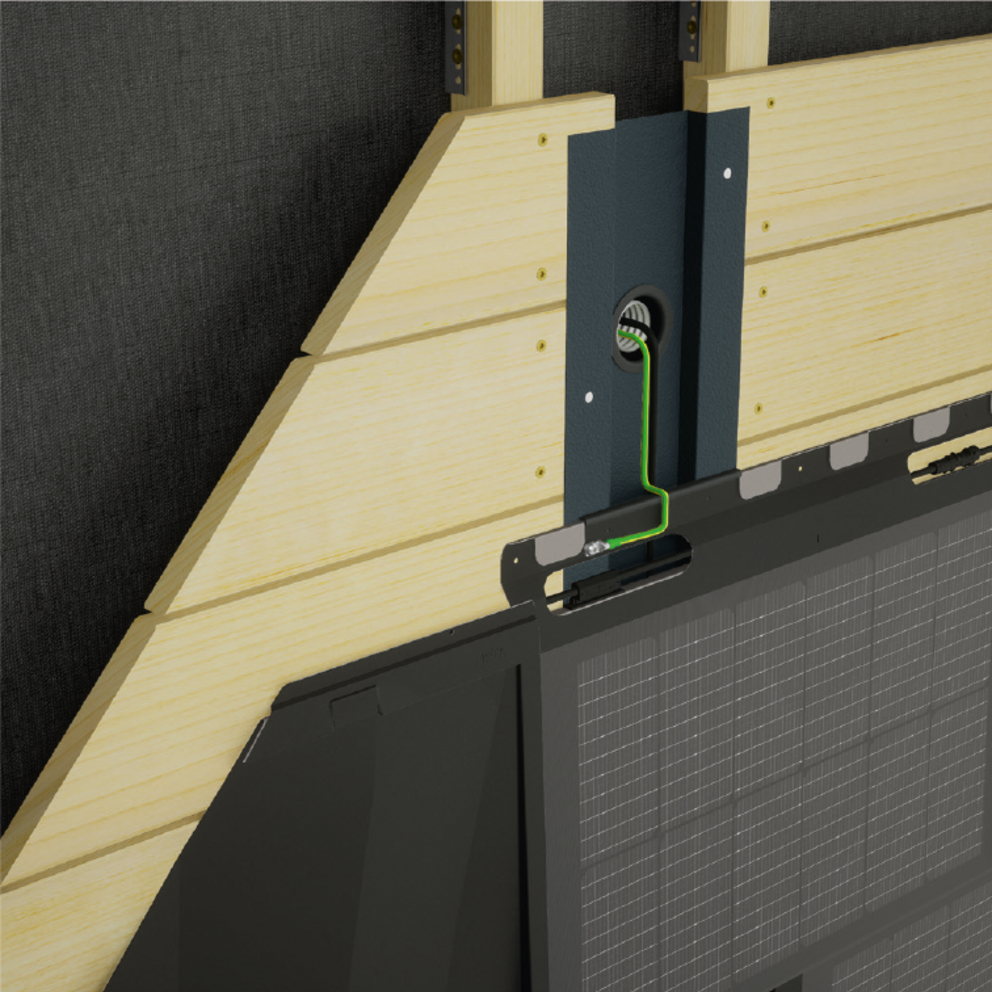
The cable bushing must be executed in such a manner that neither structural nor static impairments occur. It is also imperative to ensure an effective limitation of flame spread along the cable harnesses. National standards and guidelines must be observed. The number of cable bushings depends on the number of string cables.
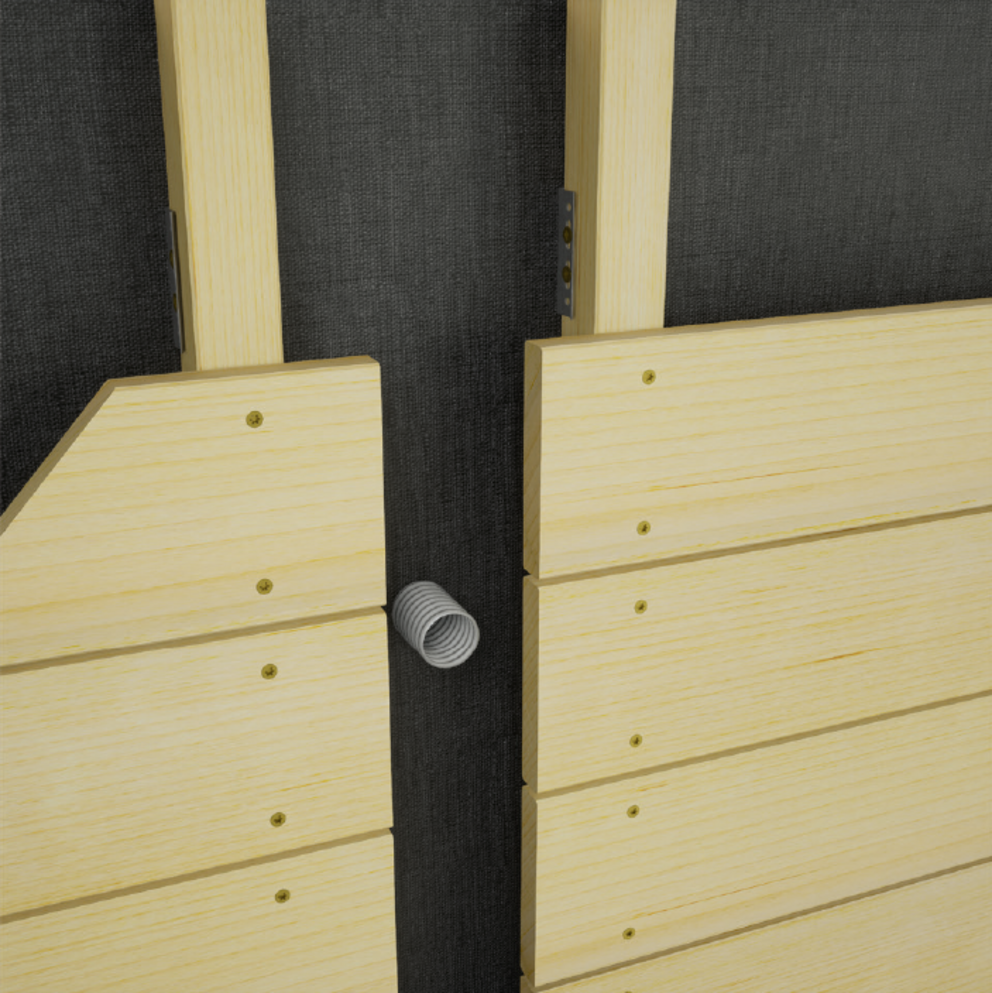
The cable duct made of complementary coil is to be positioned in the wall bushing area. It is important to ensure that the wooden formwork is recessed in this area so that the cable duct fits precisely and flush with the wall.

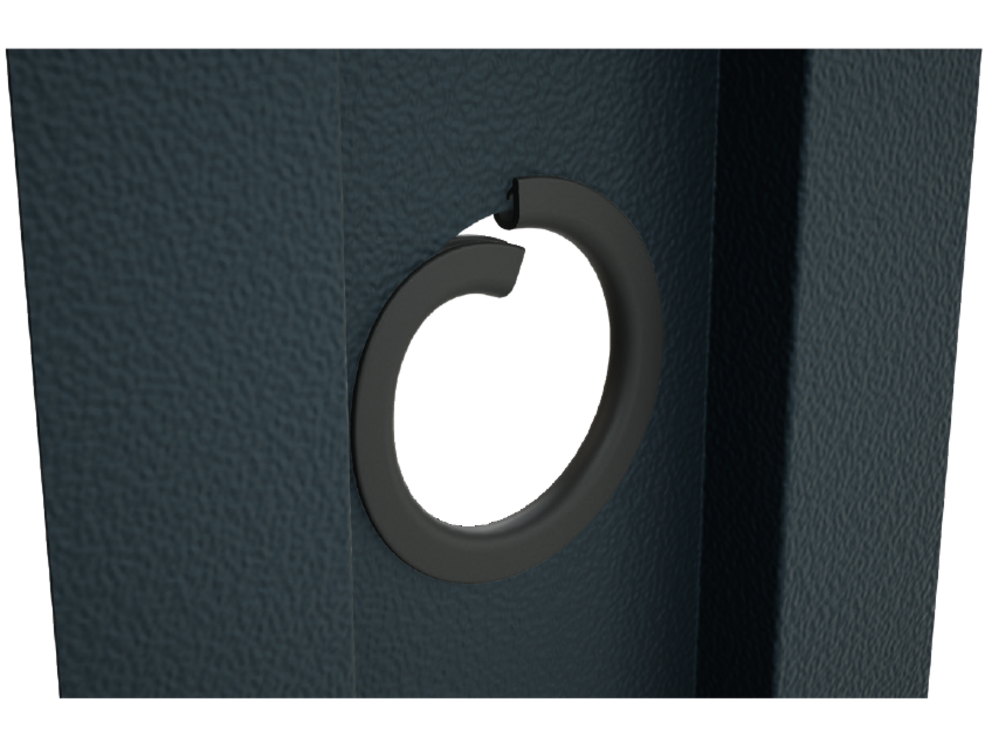
The edge protection supplied with the solar roof panels is to be inserted into the opening of the cable duct made with a hole saw. It protects the cables from being damaged at the open edge of the metal sheet. Inserting the edge protection ensures safe cable routing and prevents the cables from being damaged by movement or vibration.
The hole diameter is 50 mm due to the length of the supplied edge protection.
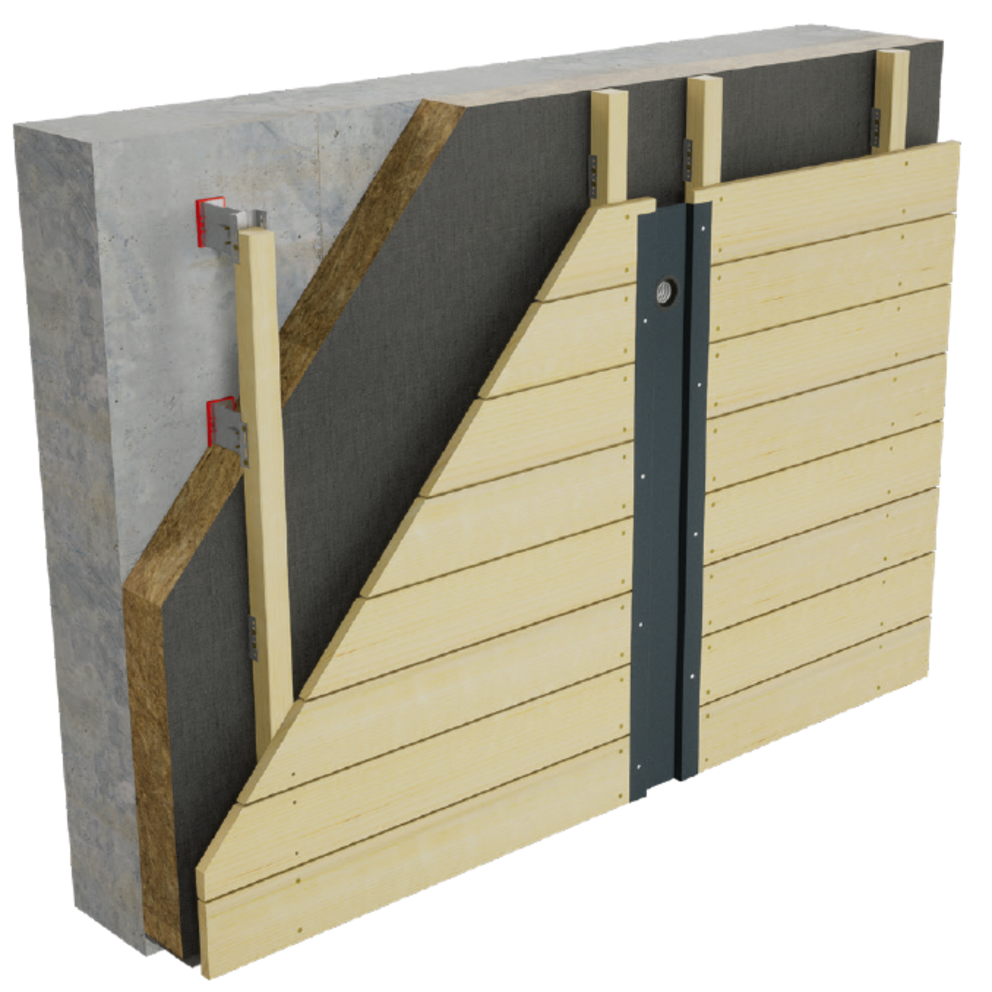
Installation of the prefabricated cable duct in the wooden formwork. It is important that the wall bushing is centrally located behind the opening of the cable duct.
Insertion of the string supply line into the cable duct
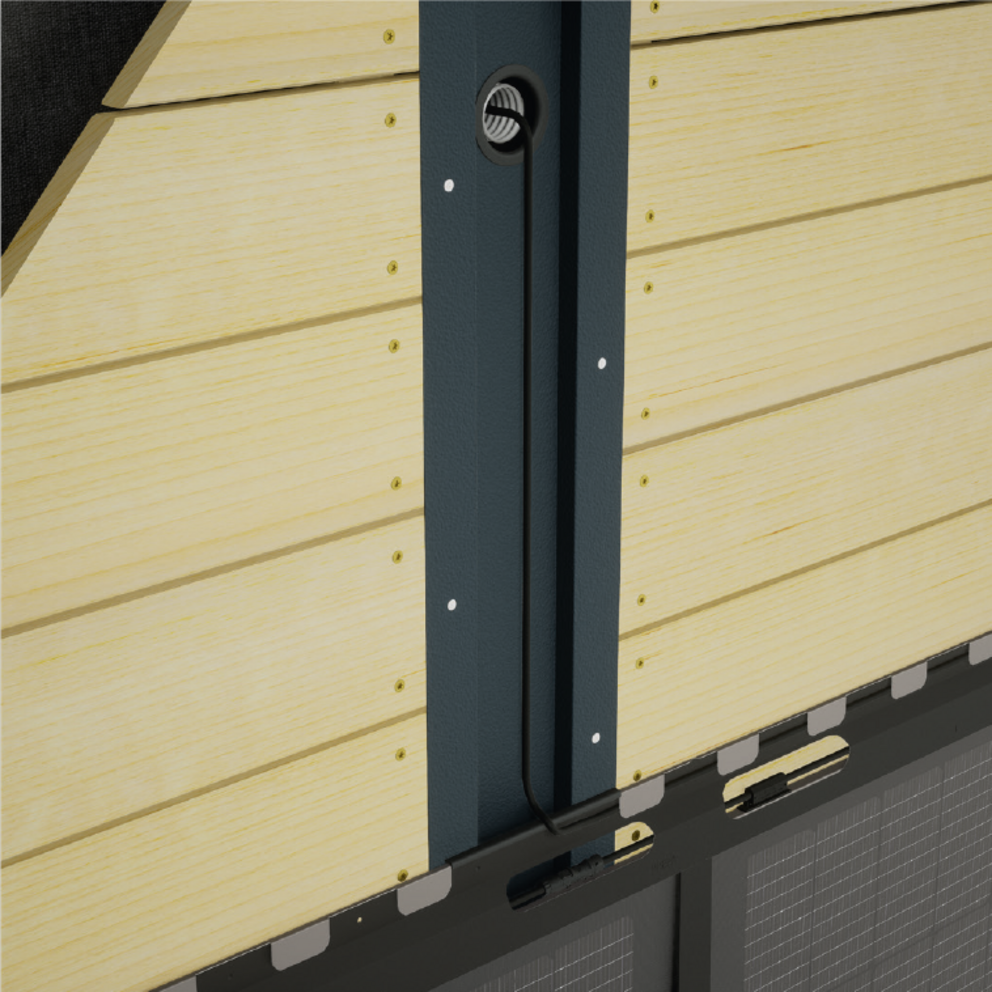
Insertion of the string discharge line and installation of the equipotential bonding cable on the solar roof panel with the supplied fastening
Prenesete lahko samo vsebine iz ene kategorije izdelkov. Če potrebujete vsebine iz več kategorij, ustvarite ločen prenos za vsako področje izdelkov.