
The sub-structure framework is to be designed and executed according to structural requirements (related to building and location).
Provide necessary information like batten spacing and detailing (e.g. hip and ridge detail, positioning of cable channel etc.) to the carpenter before the projects starts and check correctness of course.
The substrate must be carried out according to applicable standards and adapted to local conditions.
Recommendation for full formwork:
Recommendation wood-based panel (according to EN 14964):
In the case of single-skin, non-insulated roof structures, a sub-roof must comply with the requirements of national regulations (sub-roof standards), and a bituminous separation layer is required as a minimum. Structured underlay is not required due to the corrosion resistance of aluminium. PREFA does not recommend the use of structured underlay. When using thicker separation layers, the use of longer screws is necessary.
When using wood-based panels as an installation substrate for PREFA roof coverings, the choice of thickness, the mounting to the wood-based material and the intended use as a metal roof substrate must be agreed with the manufacturer or dealer of the wood-based panels.
When using wood-based panels, a separation layer separation layer is required.
OSB sheets as a substrate are special purpose solutions and should be planned as such.
Note
PREFA does not recommend the use of OSB sheets as a substrate for metal roofing with or without a separation layer.
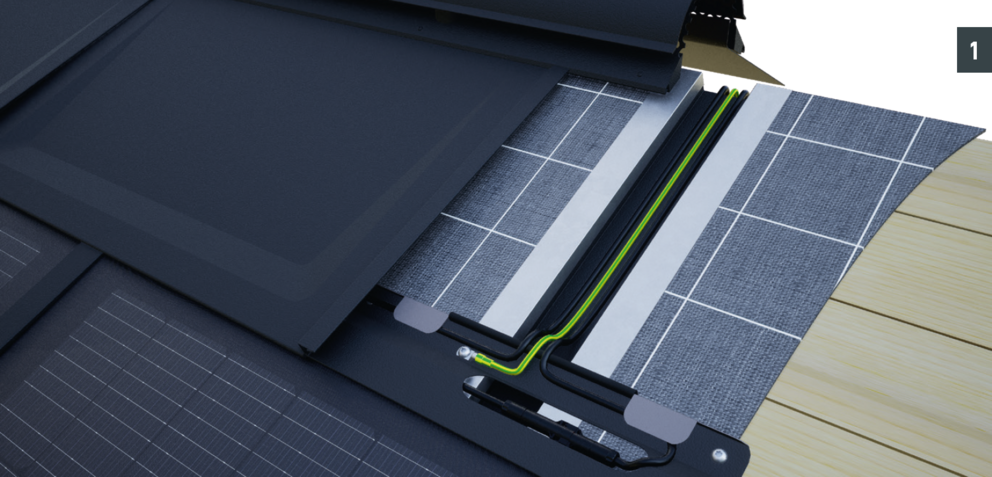
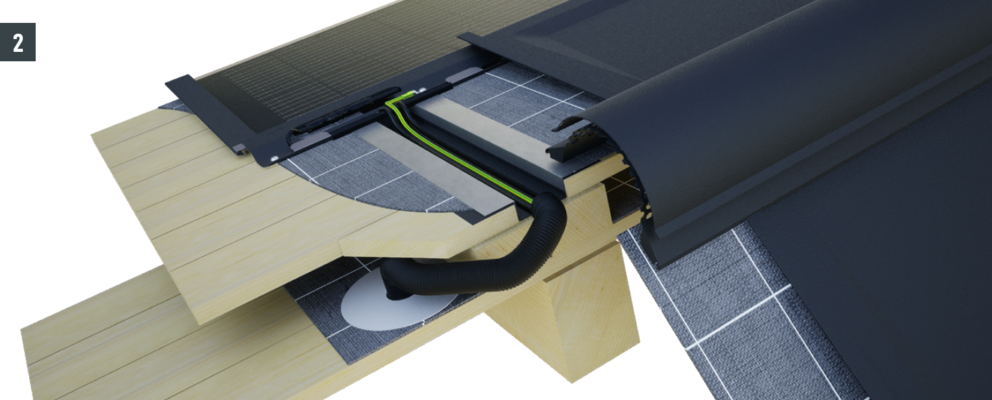
Due to the necessary cable routing, the timber supporting substrate must be made according to the following details. The number and position of cable ducts are defined by PREFA’s Product Technology department and displayed in the PV installation plan.
Single-skin wide cable channel
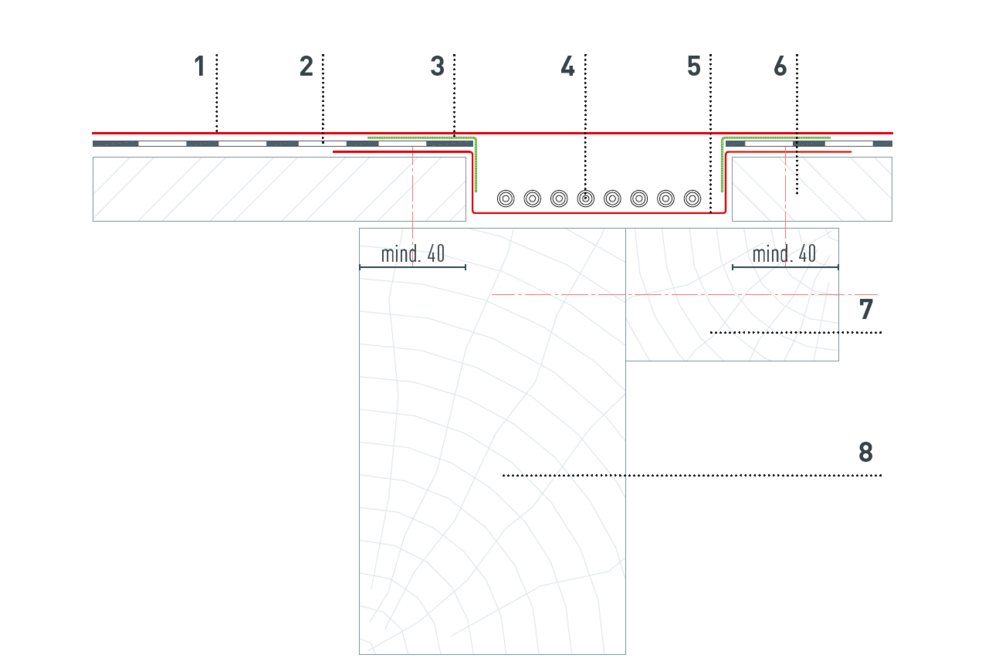
1 Solar roof panel |
5 Cable duct (flashing) |
Single-skin narrow cable channel
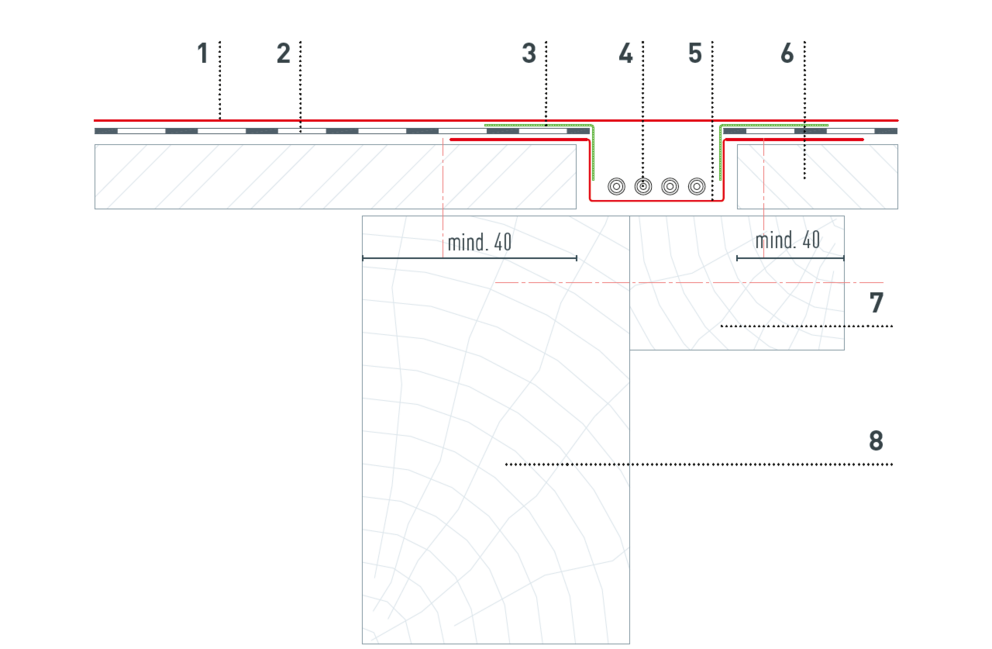
1 Solar roof panel |
5 Cable duct (flashing) |
Double-skin wide cable channel
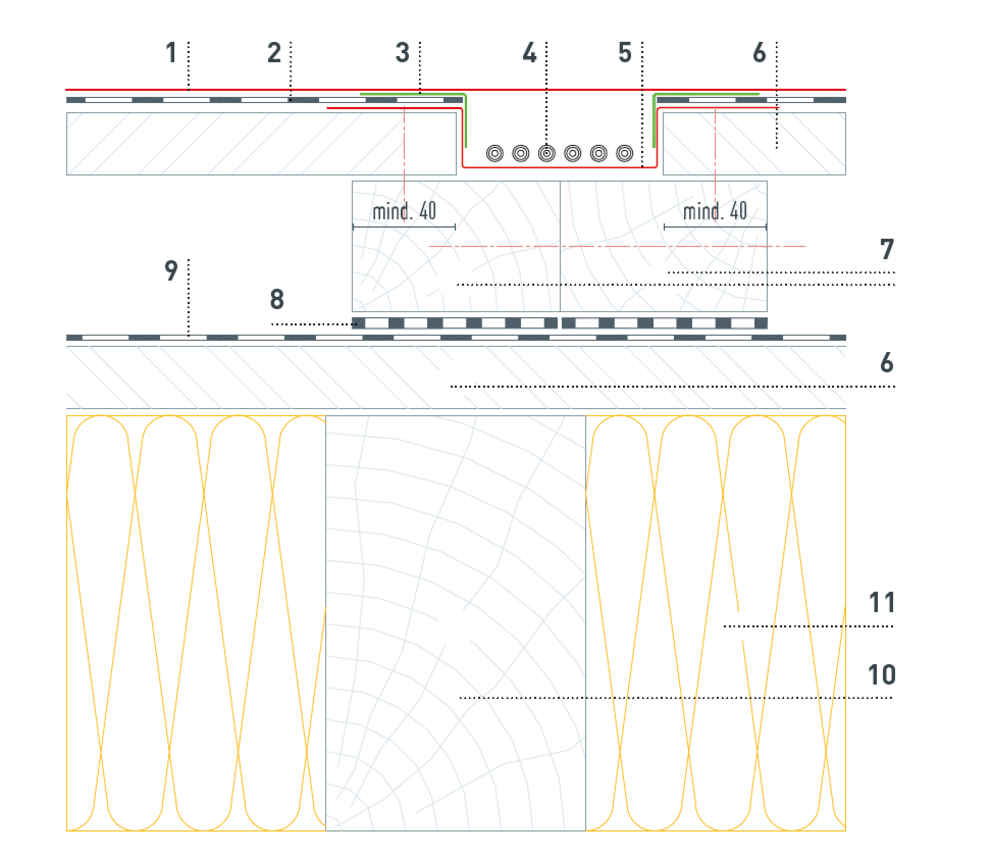
1 Solar roof panel |
7 counter battens |
Double-skin narrow cable channel
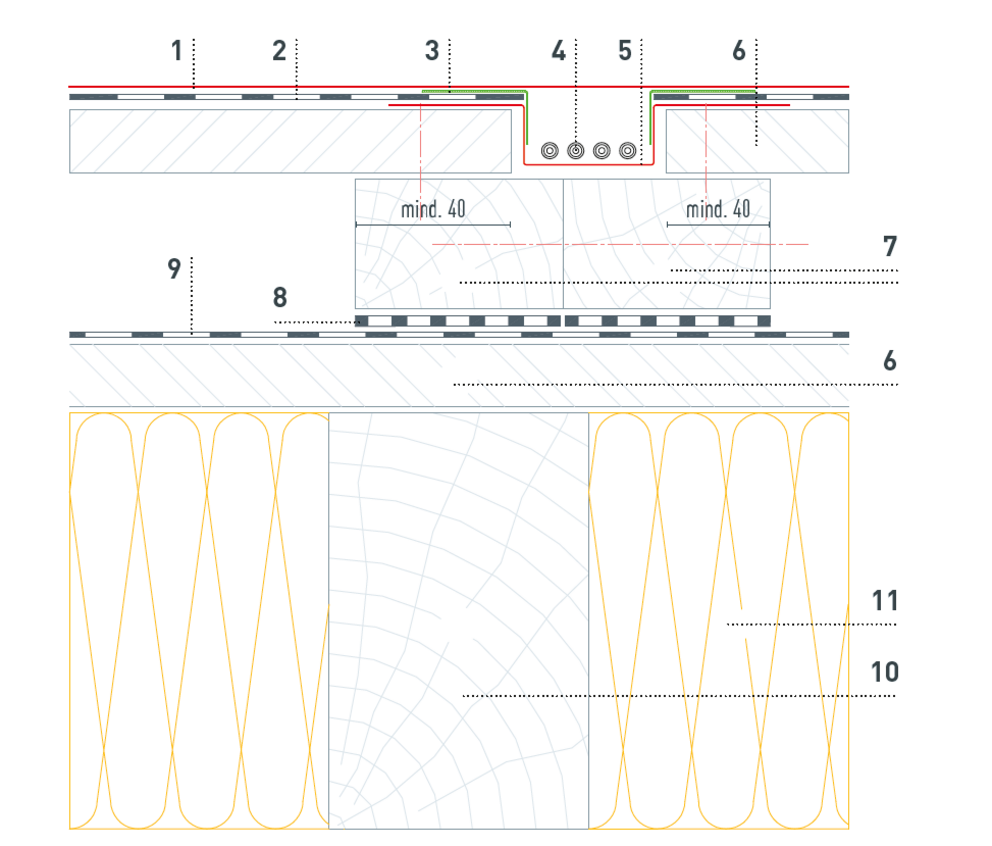
1 Solar roof panel |
7 counter battens |
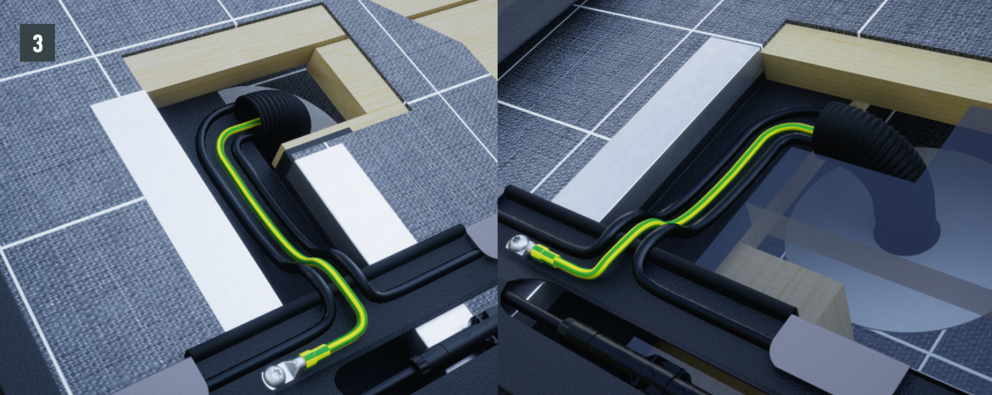
Roof penetrations or entrances into the interior of the building break through several layers of components and thus require the cooperation of several trades (roofers/tinsmiths, carpenters and electricians).
All measures are to be carried out in accordance with the construction schedule.
Roof penetrations must be made professionally and must not impair the suitability or function of the sub-roof.
Adhesive sleeves, such as those used in the PREFA solar hatch, can be such a solution.
Prenesete lahko samo vsebine iz ene kategorije izdelkov. Če potrebujete vsebine iz več kategorij, ustvarite ločen prenos za vsako področje izdelkov.